
Dot
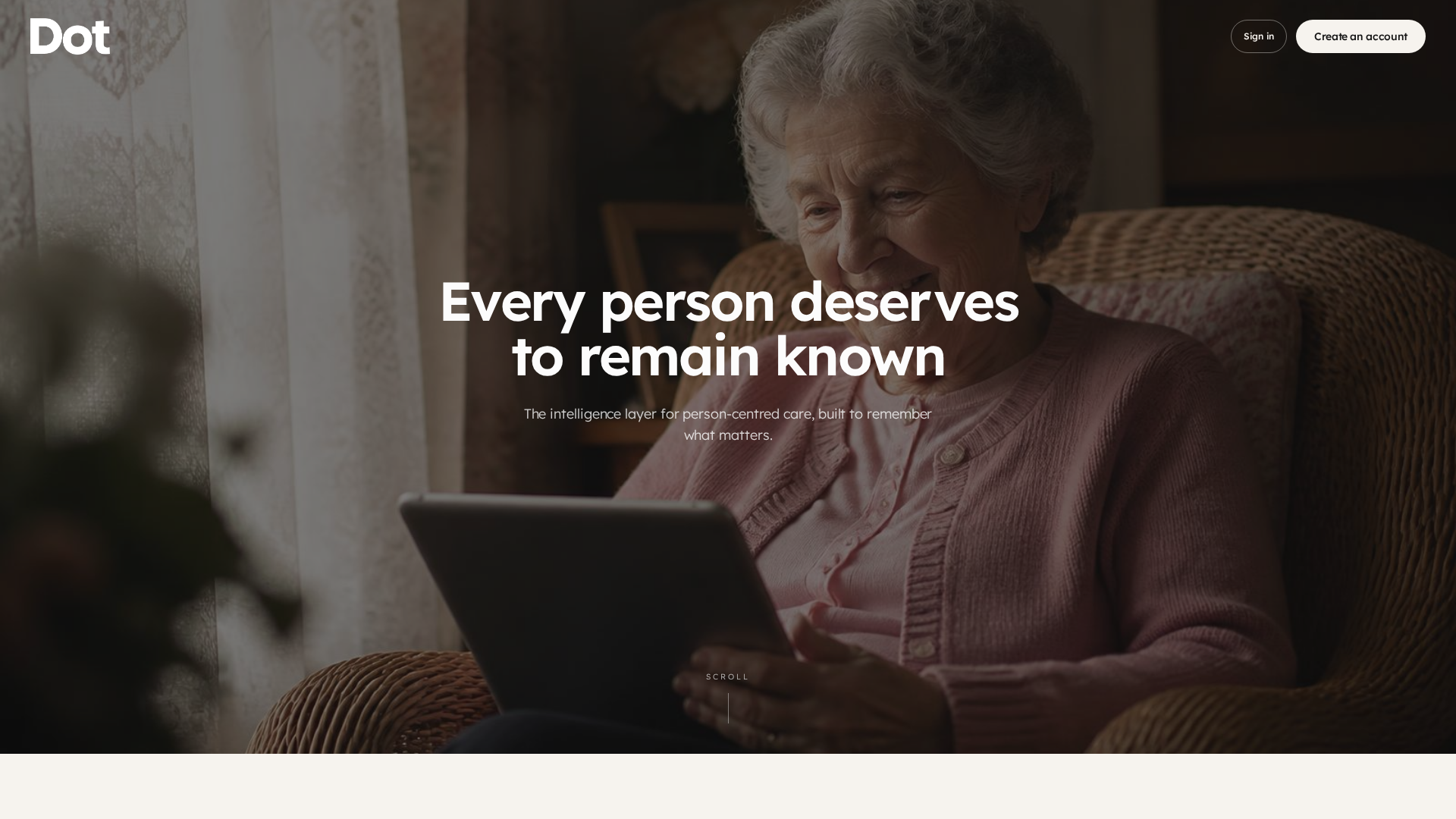
Care homes lose what they know about a resident every time staff change. We designed and built an AI-enabled app that holds it in one Living Profile shared by residents, families and care teams.
- Sector
- Social care
- Services
- User Experience · AI Enablement · Development
- Audiences
- Residents · families · care teams · operators
- Status
- Live
What they do
Dot is built around the Living Profile: a shared record of who someone is, kept jointly by the resident, their family and the care team.
Families are full users of the product rather than an afterthought. That is unusual in care software, and it matters commercially, because families are often the ones choosing the home.
What it was costing them
Knowledge about a resident disappears constantly. Staff turnover is high, shifts rotate and agency staff fill gaps, so the details that make care feel personal — that she was a headteacher, that he takes tea before the news, that music helps at four — stay with whoever was on last week.
Most care software solves paperwork instead. Saving time on records is useful, but it is not what homes actually lose.
This is also the most regulated setting we work in: vulnerable adults, safeguarding, capacity and consent, and CQC record-keeping.
The work
We designed and built one product for three groups with very different needs. A resident may have limited vision, dexterity or memory. A carer is mid-task and often one-handed on a phone. An operator needs oversight, compliance evidence and cost control.
Instead of three products, there is one Living Profile with three ways in, each shaped around what that person is doing when they open it.
We kept the AI to one job: holding and retrieving human detail. Clinical and safeguarding judgement stays with people.
What the AI is not allowed to do
Care buyers ask what the AI will do to their residents before they ask what it does for their staff. So we set the limits before we designed anything.
It surfaces and maintains the human record. It does not assess risk, make clinical recommendations or decide when to escalate. Where it spots a pattern, it shows the pattern to a person.
That gives a registered manager a product they can put in front of an inspector without caveats, which is what closes a sale in this sector.
What changed
- 3
- User groups in one product
- 1
- Shared record, not three systems
Deployment numbers and accessibility conformance are being confirmed with the client before publication.
Similar work elsewhere
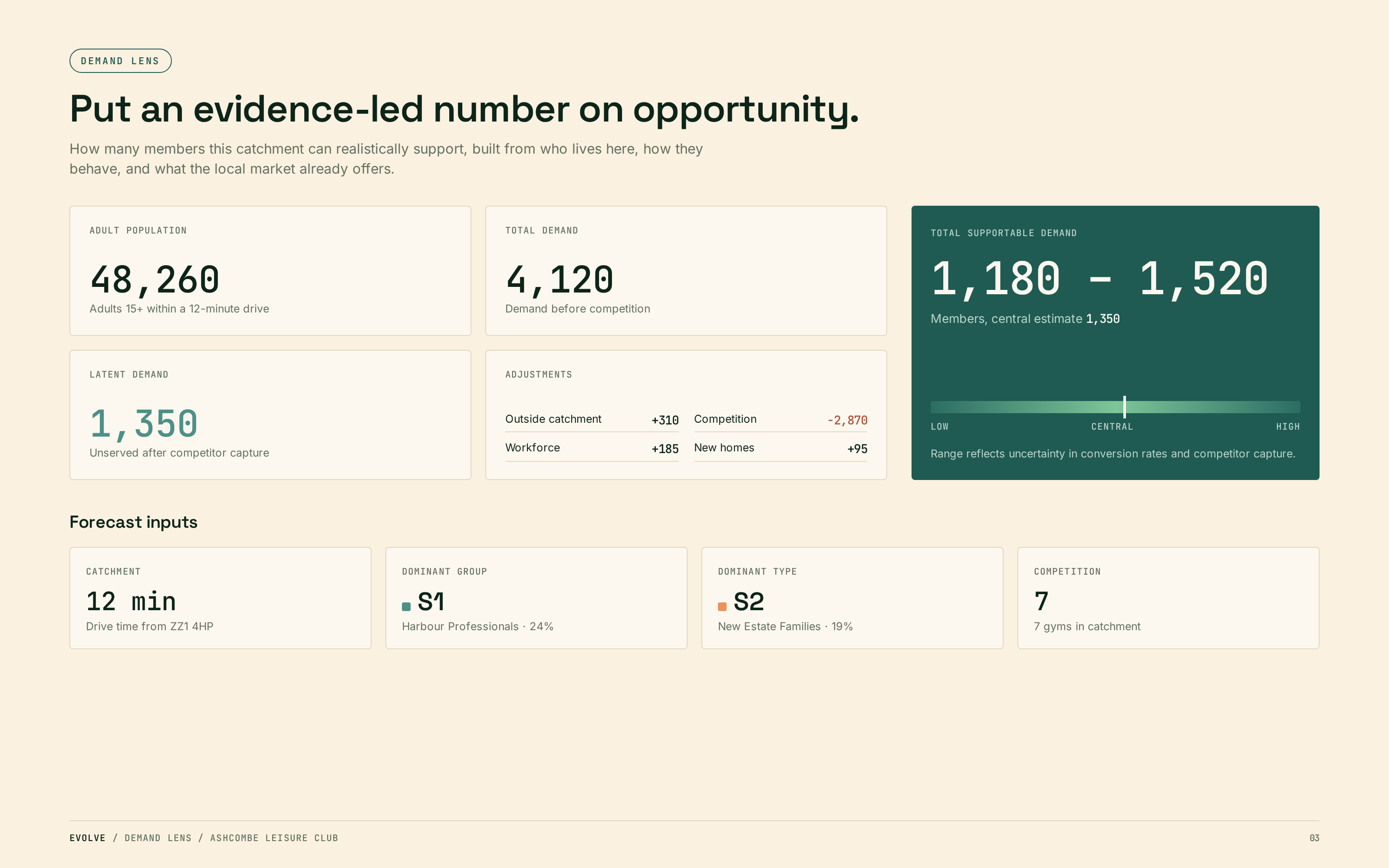
6 weeks → same day
Feasibility turnaround
EVOLVE
Site feasibility answered the same day instead of six weeks later.
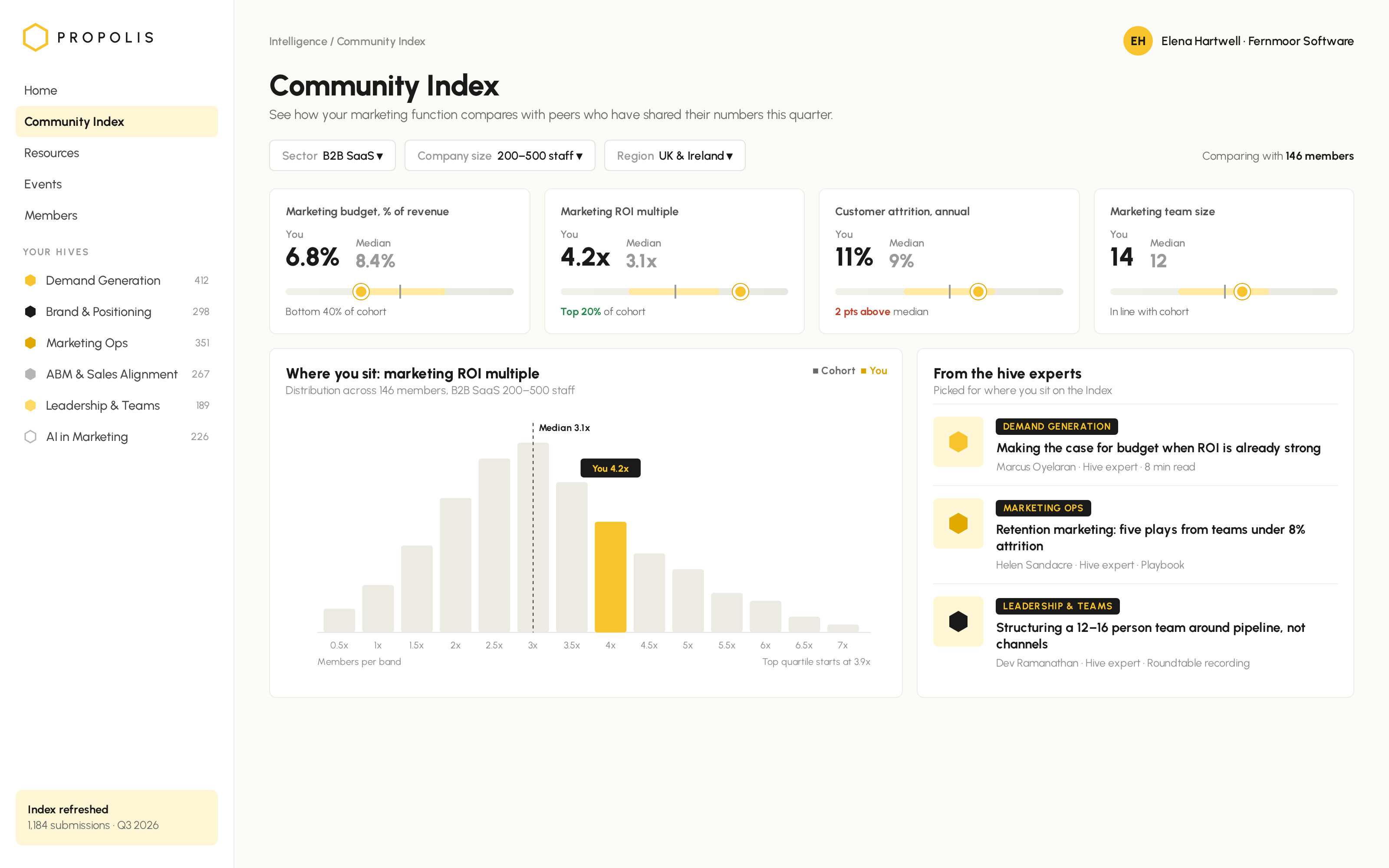
3
Membership audiences served
Propolis
A membership community three audiences stay in, launched in 2021 and still growing.
Propolis
Could this work for your business?
Thirty minutes with the people who would do the work. You will leave with a view on whether it is worth building and roughly what it costs.